


How Crypto Casinos in the UK Are Funding Green Innovation: The Rise of Blockchain Gambling Platforms Supporting Renewable Biogas Projects
How Crypto Casinos in the UK Are Funding Green Innovation: The Rise of Blockchain Gambling Platforms Supporting Renewable Biogas Projects
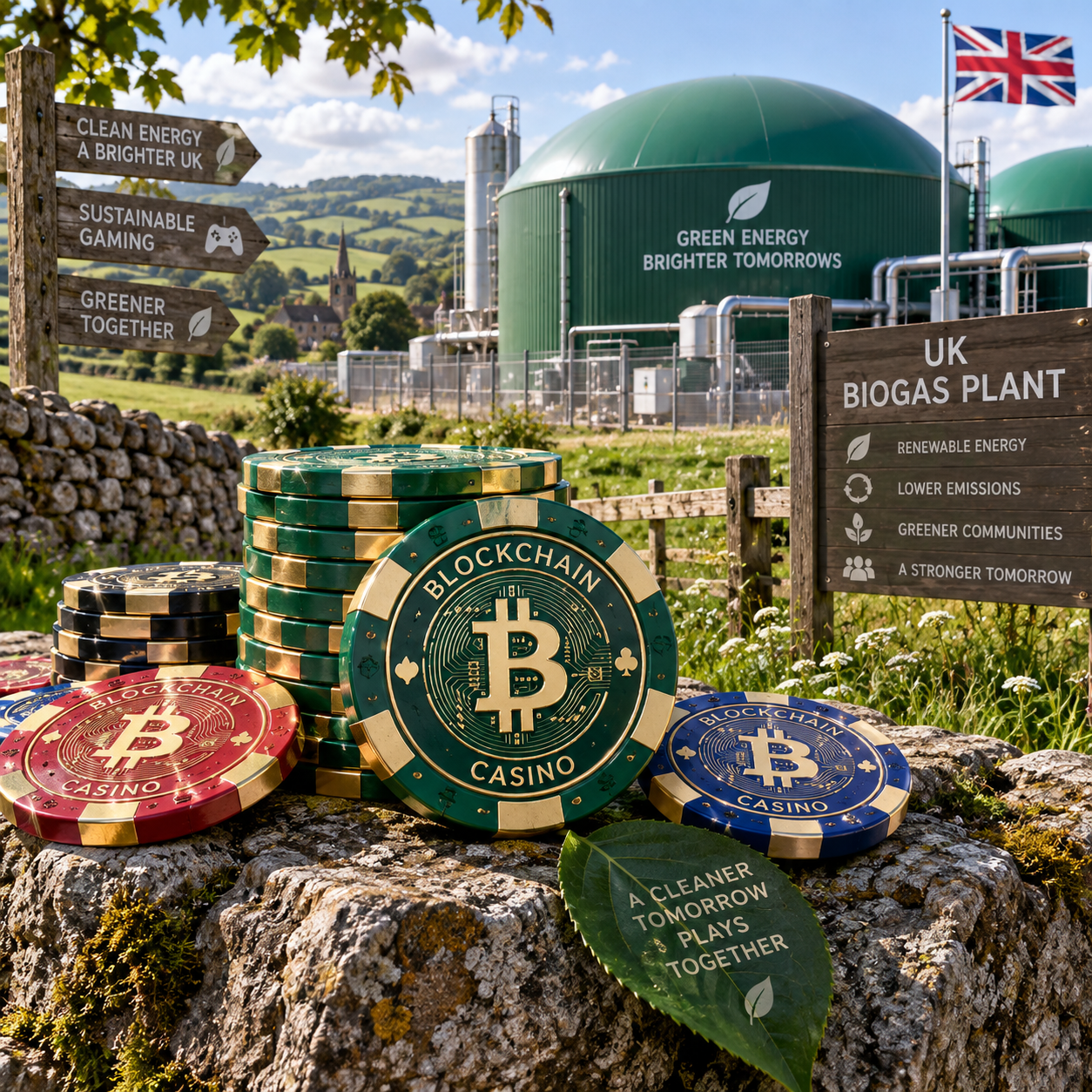
I'll admit it: when I first heard that a handful of UK-facing crypto casinos were quietly channelling profits into renewable energy research, I assumed it was a marketing stunt. Gambling and green energy seemed like odd bedfellows. But the more I dug into it, the more I realised this isn't a passing trend—it's a genuine shift in how digital gambling platforms are positioning themselves for a future where players, regulators, and investors all expect more than just fast payouts and flashy slots.
What's emerged is a curious but logical alliance. Blockchain-based gambling operators, many of them licensed to serve UK players, have started directing a slice of their revenue toward renewable projects, with biogas microplants becoming a surprisingly popular choice. It raises an obvious question: why would an industry built on risk and chance care about methane capture and organic waste conversion?
What Are Crypto Casinos and How Do They Operate?
Before getting into the sustainability angle, it's worth explaining what makes these platforms different from the traditional online casinos most UK players grew up with. Crypto casinos run on blockchain rails, meaning transactions—deposits, wagers, withdrawals—are recorded on a public or semi-public ledger rather than sitting inside a closed corporate database. Payments typically happen in Bitcoin, Ethereum, or increasingly in stablecoins, and smart contracts often handle payouts automatically, cutting out a lot of the manual processing that legacy platforms rely on.
This decentralised structure isn't just a technical curiosity. It changes who has visibility into how money moves, which turns out to be central to the whole green-funding story.
The Role of Blockchain Transparency in Ethical Funding
One of blockchain's genuine strengths is auditability. Because every transaction is logged on-chain, it's technically possible for anyone to trace how funds move from a casino's operational wallet to a designated project wallet. Some platforms have leaned into this by publishing wallet addresses tied specifically to environmental initiatives, letting players verify that a stated percentage of losses (or house edge) actually lands where it's promised to.
This level of transparency is rare in traditional charitable giving, where donors often have to take a company's word for it. In gambling specifically—an industry that's faced plenty of scepticism—this kind of verifiable trail matters. It gives sustainability claims some teeth instead of just being a line in a press release.
Why UK Crypto Casinos Are Embracing Sustainability
There isn't one single reason behind this shift; it's more of a convergence of pressures. UK regulators have been tightening scrutiny on gambling operators generally, and while environmental funding isn't a licensing requirement, operators know that demonstrating social responsibility helps with public perception and, indirectly, with regulatory goodwill. ESG branding has also become a competitive differentiator—when dozens of platforms offer near-identical slots and live dealer tables, an environmental angle helps a brand stand out.
Then there's player demand. A growing segment of UK crypto gamblers, particularly younger, tech-literate users, actively look for platforms that align with their values. Ethical gambling isn't a contradiction to them; it's an expectation.
Offsetting Crypto's Energy Footprint
There's also a more defensive motivation. Cryptocurrency has taken years of criticism over energy consumption, particularly proof-of-work coins like Bitcoin. Crypto casinos, by association, inherit some of that reputational baggage. Funding renewable energy projects—especially ones with tangible, measurable outputs like biogas generation—gives these platforms a way to counterbalance that narrative. It's not a perfect offset, but it's a visible gesture that resonates with users who are otherwise wary of crypto's environmental cost.

How Blockchain Gambling Platforms Are Funding Renewable Biogas Projects
The mechanics behind this funding vary by platform, but a few models have become fairly standard. Some casinos use smart contracts that automatically route a fixed percentage of the house edge into a designated green wallet every time a bet settles. Others operate more like traditional revenue-sharing schemes, allocating a portion of quarterly profits to partner organisations. A few have set up dedicated 'charity wallets' that players can voluntarily contribute to, sometimes matched by the operator.
Biogas has become an especially attractive recipient of this funding for a few practical reasons: it's measurable, it's scalable, and it produces outcomes that are easy to communicate to a general audience—turning organic waste into usable energy is a story people understand instinctively, unlike more abstract carbon-credit schemes.
Among the projects benefiting from this kind of support is micro4biogas.eu, a European research initiative focused on small-scale biogas technology. It's become something of a reference point in discussions about where crypto casinos are directing their green funding, precisely because it represents the kind of decentralised, community-scale energy production that aligns naturally with blockchain's own decentralised ethos.
Spotlight on Micro-Scale Biogas Innovation
Micro-scale biogas plants differ from the large industrial digesters most people picture when they think of biogas. Instead of massive centralised facilities, microplants are designed to operate on farms, in small communities, or even at individual industrial sites, converting local organic waste—food scraps, agricultural residue, manure—into usable methane and electricity on a much smaller footprint.
This scalability is exactly what makes them appealing to tech-forward funders. A single biogas microplant doesn't require the enormous capital outlay of a utility-scale renewable project, which means blockchain gambling platforms with relatively modest green budgets can still make a measurable difference. It also fits neatly with the UK's broader net-zero ambitions, which increasingly emphasise distributed, community-level energy solutions rather than relying solely on massive centralised infrastructure.
- Lower upfront investment compared to industrial-scale renewable projects
- Faster deployment timelines, often within months rather than years
- Direct community benefit through localised waste management and energy production
- Strong alignment with decentralised funding models used by blockchain platforms
Benefits and Challenges of Gambling-Funded Green Projects
There's a lot to like about this model. It diversifies the funding pool available to renewable energy researchers, who often struggle to secure consistent capital from traditional grants alone. It also raises public awareness—players who might never have thought about biogas suddenly encounter it through their gambling platform's promotional material. And frankly, the cross-industry collaboration itself is interesting; it shows that unconventional funding sources can meaningfully support climate-focused research.
That said, it's not without friction. Some critics argue that gambling-linked philanthropy carries an inherent tension—can profits generated from potentially harmful betting behaviour ever be fully 'ethical,' even when redirected toward good causes? There are also legitimate transparency concerns when platforms make vague sustainability claims without verifiable on-chain proof.
Navigating UK Gambling and Environmental Regulations
The UK Gambling Commission doesn't currently mandate environmental contributions, so this remains a voluntary practice rather than a regulatory requirement. That said, operators funding green projects still need to navigate standard licensing rules around responsible gambling messaging, ensuring that environmental branding doesn't overshadow required consumer protection disclosures. Meanwhile, environmental funding bodies in the UK and EU are starting to pay closer attention to where private-sector green capital originates, which could eventually mean more formal reporting standards for gambling-linked contributions.
The Future of Blockchain Philanthropy in Renewable Energy
If this trend continues on its current trajectory, I'd expect to see more UK-facing crypto casinos formalising green partnerships rather than treating them as one-off marketing gestures. Biogas funding specifically seems likely to grow, given how well it matches blockchain's decentralised philosophy and how tangible its results are compared to more abstract sustainability initiatives.
For players and investors who care about where their money ends up, this is worth watching closely. Ethical crypto gambling isn't just a buzzword anymore—it's becoming a genuine differentiator in a crowded market, and platforms that can transparently prove their environmental contributions will likely earn more long-term loyalty than those relying on vague promises. If you're exploring this space, it's worth asking any platform directly how their green funding works, what percentage goes where, and whether it's verifiable on-chain. That single question tells you a lot about whether a casino's sustainability claims are substance or just spin.